Define is live today.
Pick a stage — the film and the walkthrough both follow it. Define is shipped and working. The other four are sequenced behind it, each one building on the data this stage creates.
// Nothing here is a roadmap slide. If a stage is not live, it says so.
▸ Read it instead — all twelve beats
- 0:00 CoverTwo lines of the thesis land over the drifting graph texture; the wordmark signs it
- 0:06 GapA recorded requirement card sits beside an empty dashed rationale card that keeps pulsing
- 0:14 CharterThe charter draft is revealed and the low-confidence banner is ringed and spotlit
- 0:22 Read onlyThe mainline header strip wipes in and the READ ONLY chip is ringed
- 0:28 RejectedThe two rejected alternatives, with one ring sliding from the first reason to the second
- 0:38 AuditorThe auditor panel lands, then the capture-quality column insets below it
- 0:46 ProposesThe AI suggestion card arrives; rings hit the confidence badge, then the accept/reject row
- 0:54 OverruledThe engineer quote holds while the rejection reason is ringed in the shot
- 1:04 GraphThe stakeholder graph wipes open left to right so the five concern edges appear to draw
- 1:12 GapsThe uncovered-concern chips are ringed, then the drafted requirement confidence score
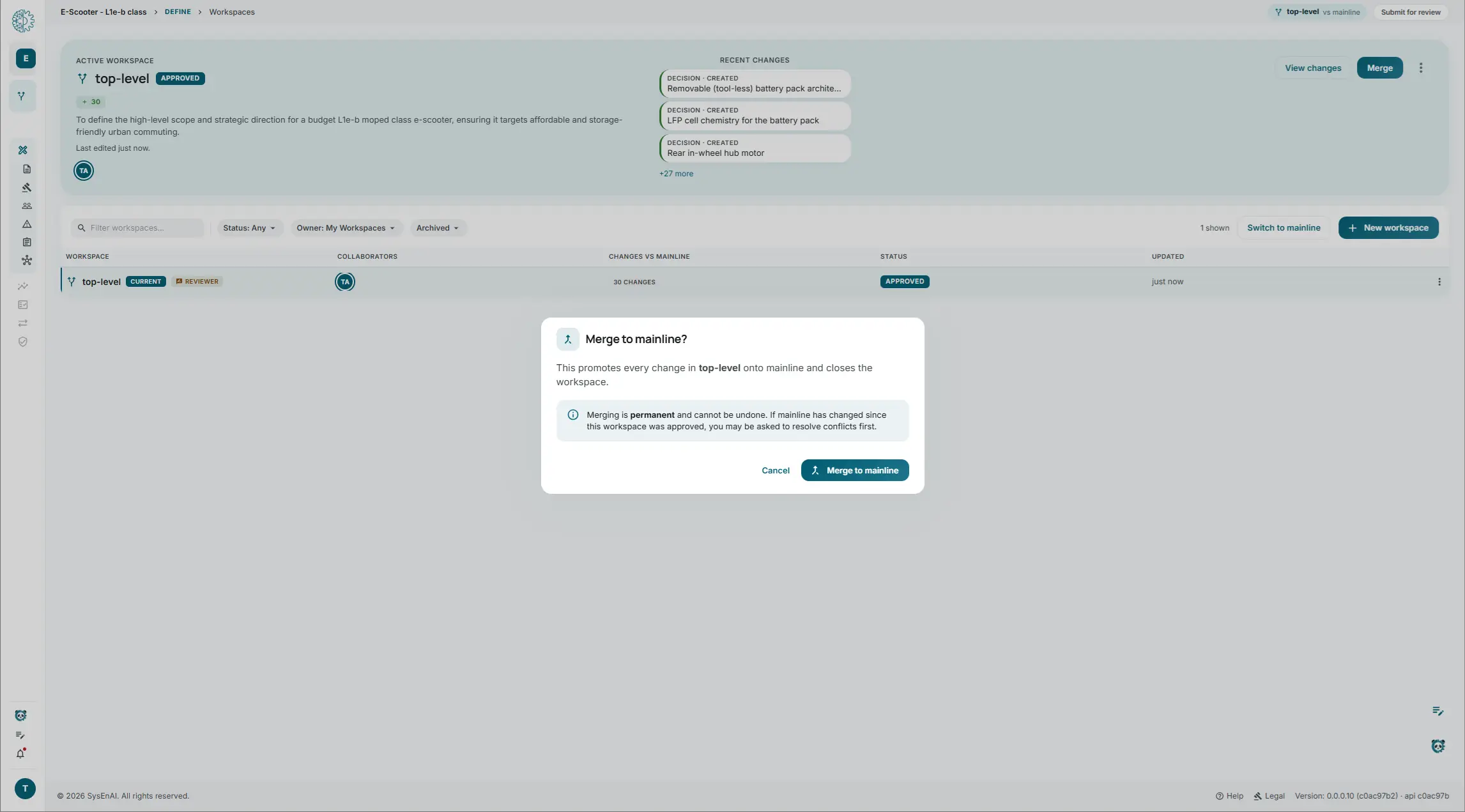
- 1:20 MergeThe merge dialog arrives and the permanence warning is ringed
- 1:28 CloseDark teal close: DEFINE live, the four roadmap phases step in, the url resolves
Recorded, attributed, and linked.
-
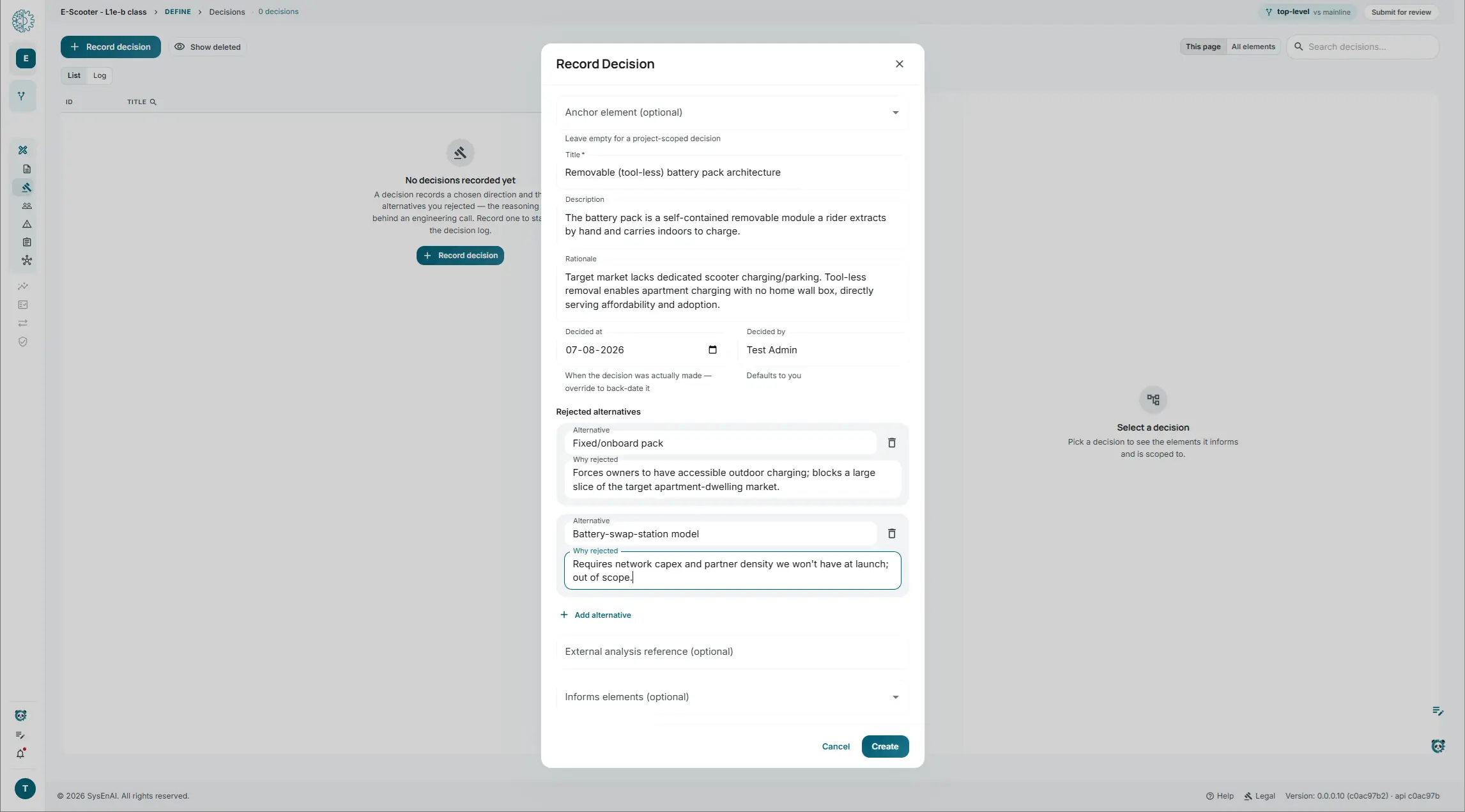
fixed pack, swap stations — each with a reason it was rejected -
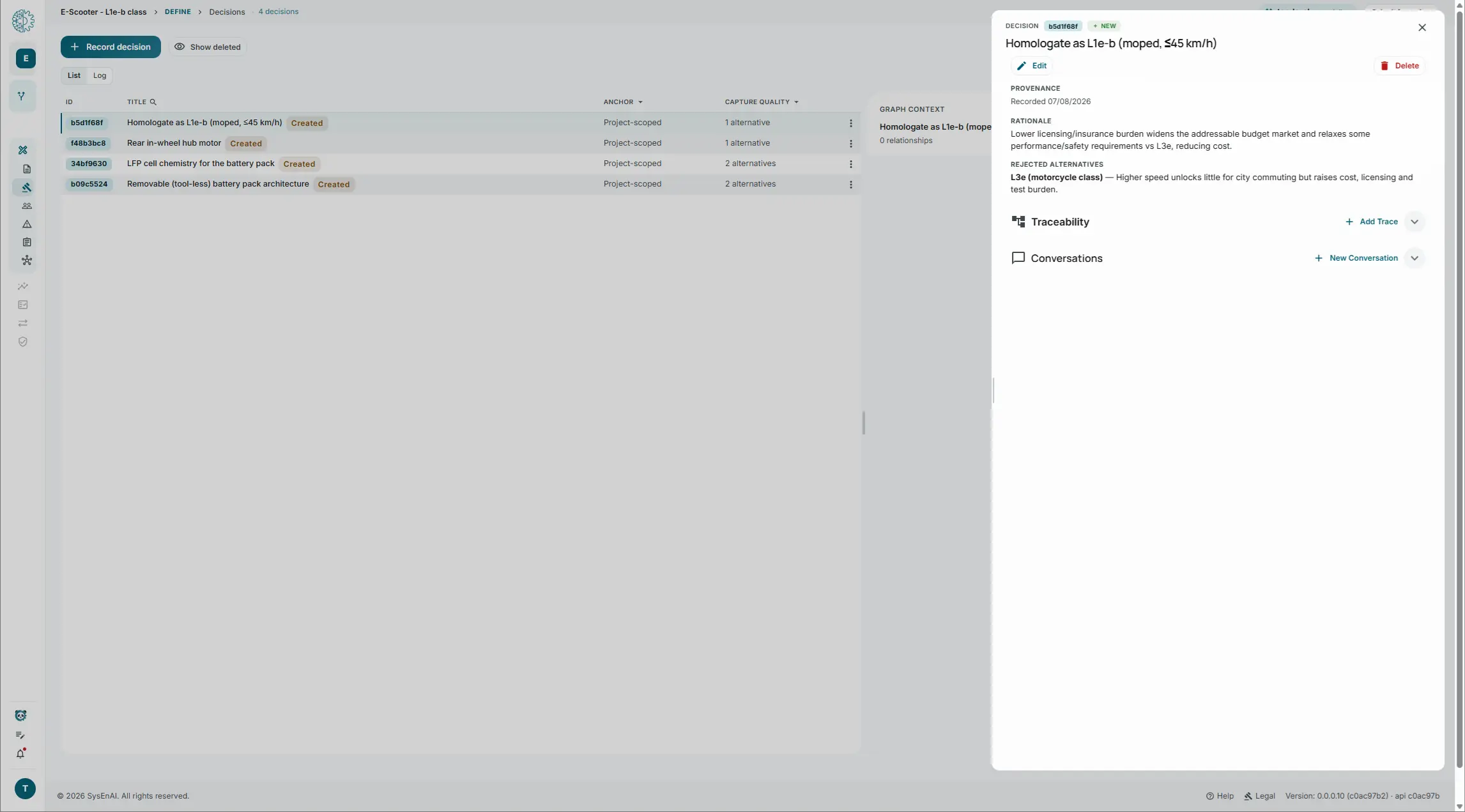
capture quality · provenance, rationale, rejected alternatives -
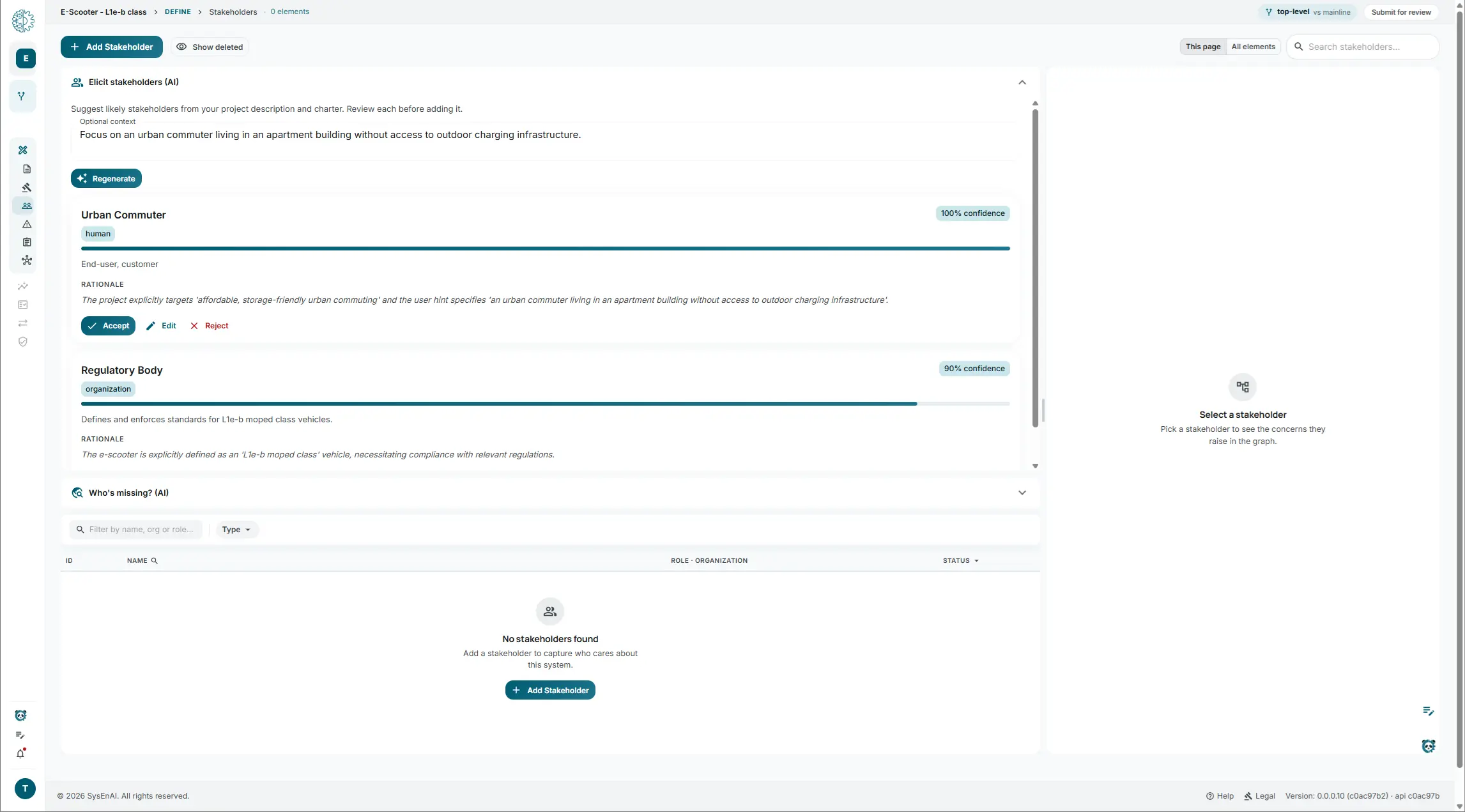
proposed stakeholder · rationale · accept / edit / reject -
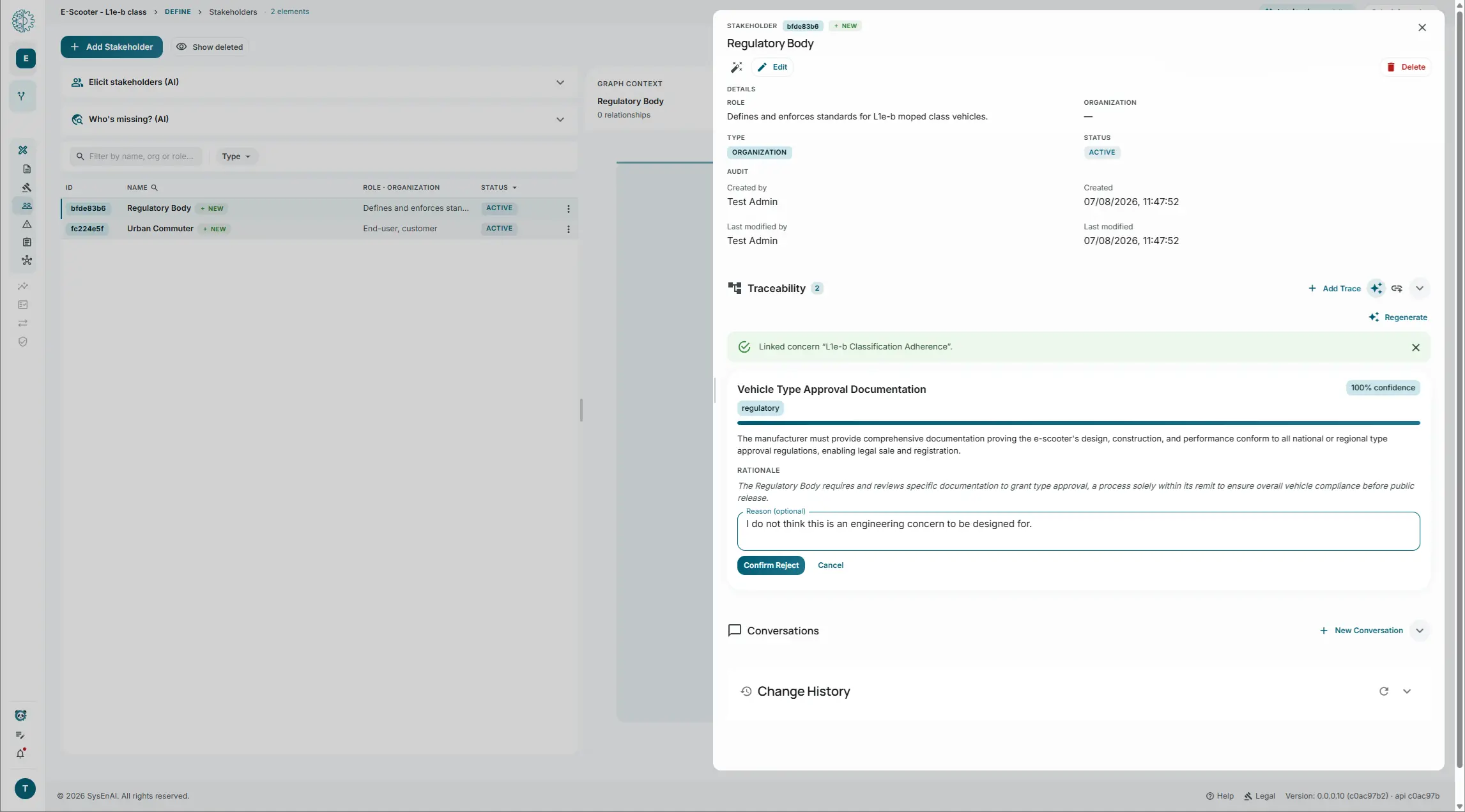
100% confidence → typed reason → confirm reject -
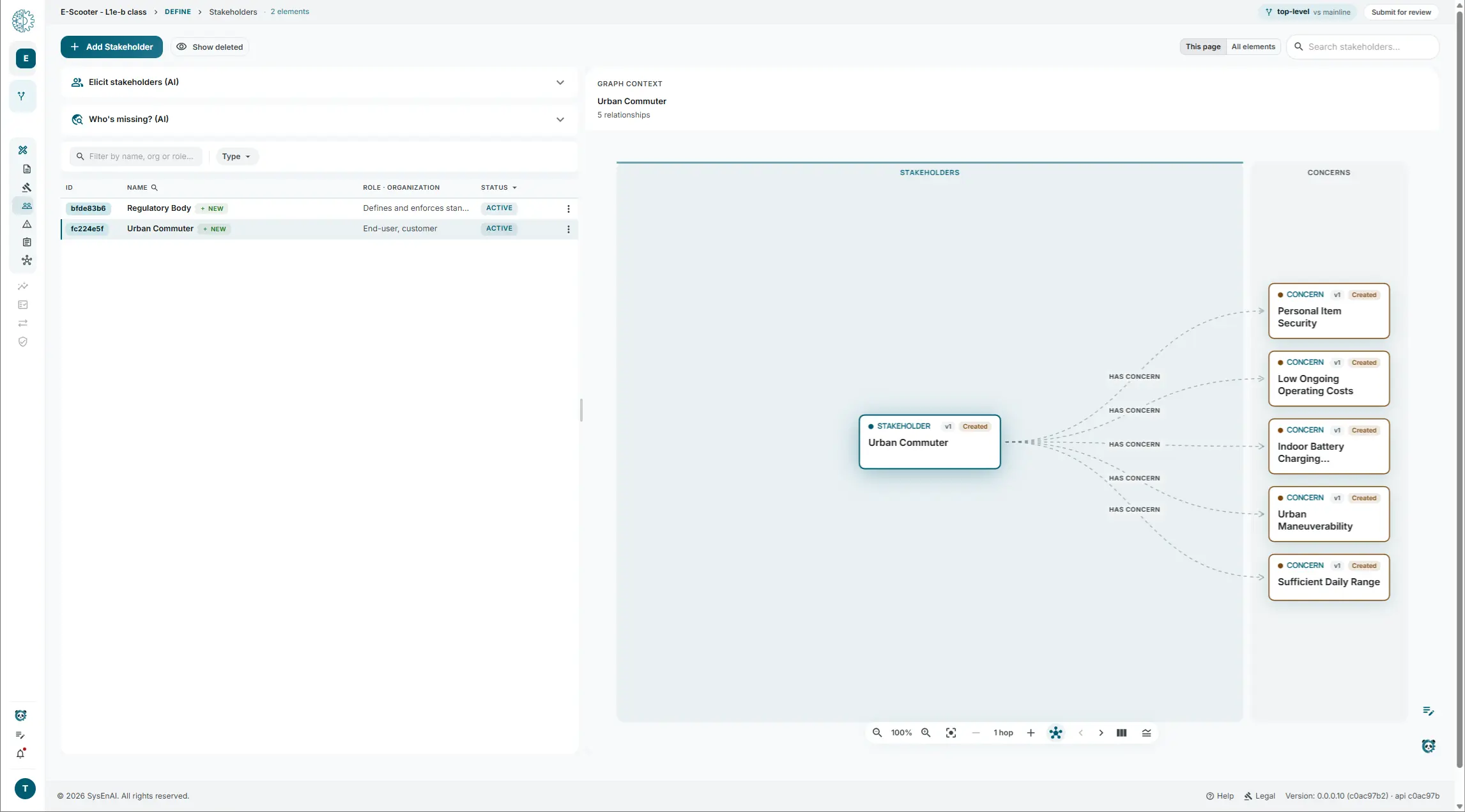
one stakeholder node · five has_concern edges -
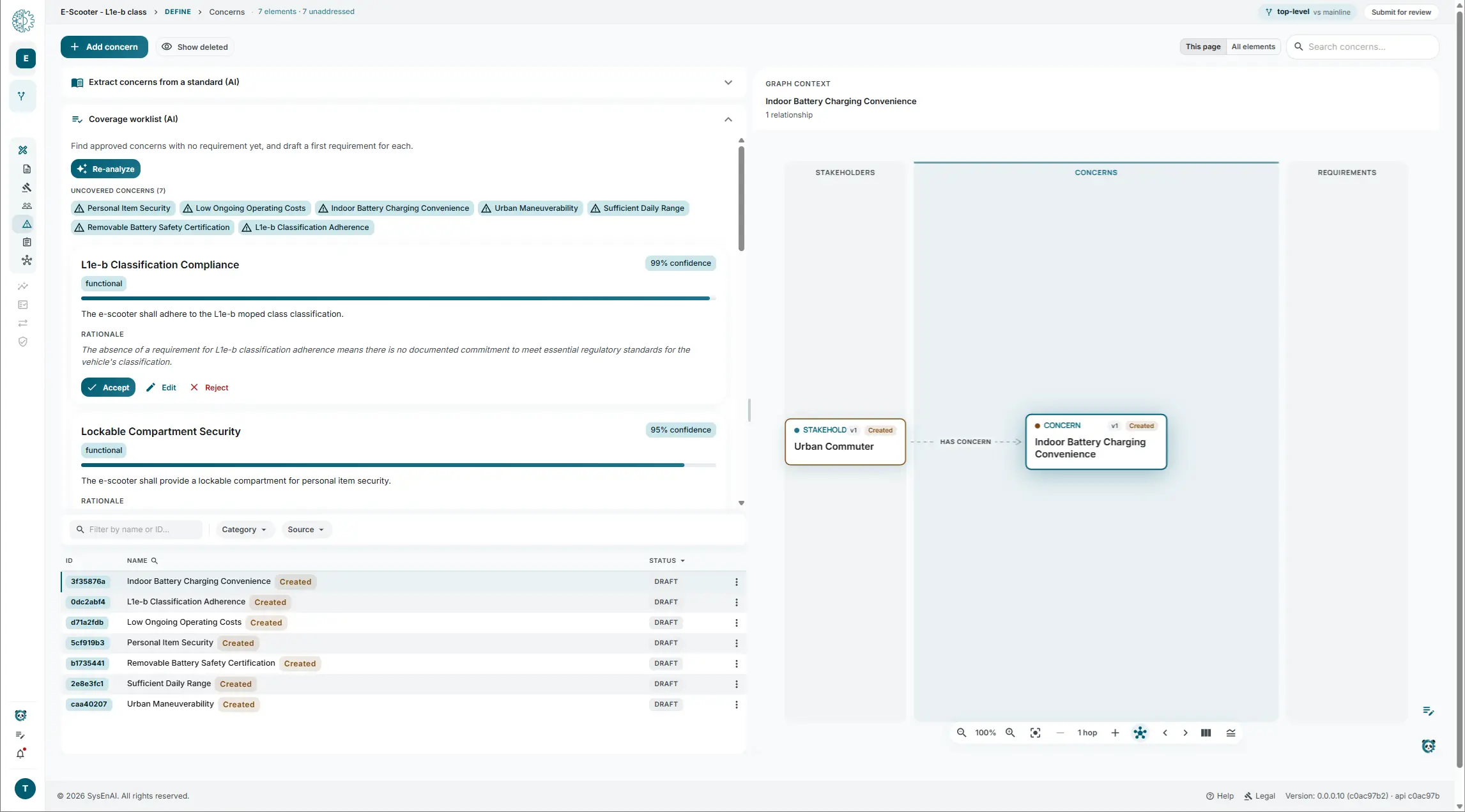
uncovered concerns (7) · first draft requirement · 99% confidence
Analyze is next.
There is nothing to show yet, and we would rather show you nothing than a mockup. When it ships, its film and its walkthrough appear right here — same rail, same frame, no new page.
What Analyze will do →Verify comes after Analyze.
There is nothing to show yet, and we would rather show you nothing than a mockup. When it ships, its film and its walkthrough appear right here — same rail, same frame, no new page.
What Verify will do →Sync comes after Verify.
There is nothing to show yet, and we would rather show you nothing than a mockup. When it ships, its film and its walkthrough appear right here — same rail, same frame, no new page.
What Sync will do →Assure closes the loop.
There is nothing to show yet, and we would rather show you nothing than a mockup. When it ships, its film and its walkthrough appear right here — same rail, same frame, no new page.
What Assure will do →And the parts you would expect.
The walkthrough above is what makes this different. The rest is the machinery that makes it safe.
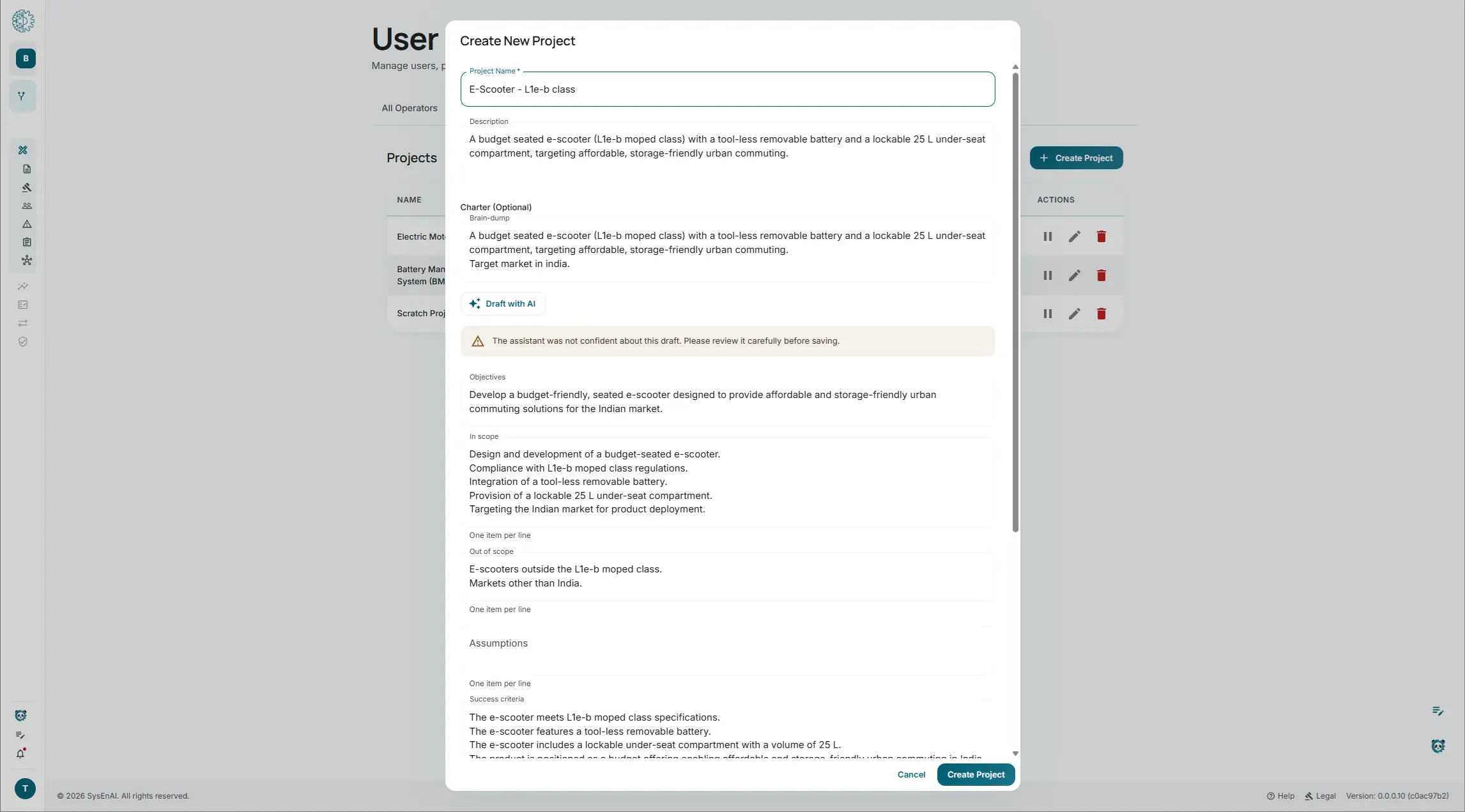
Charter
Three sentences of plain English in; objectives, scope and success criteria out — with a banner that tells you when the assistant was not confident.
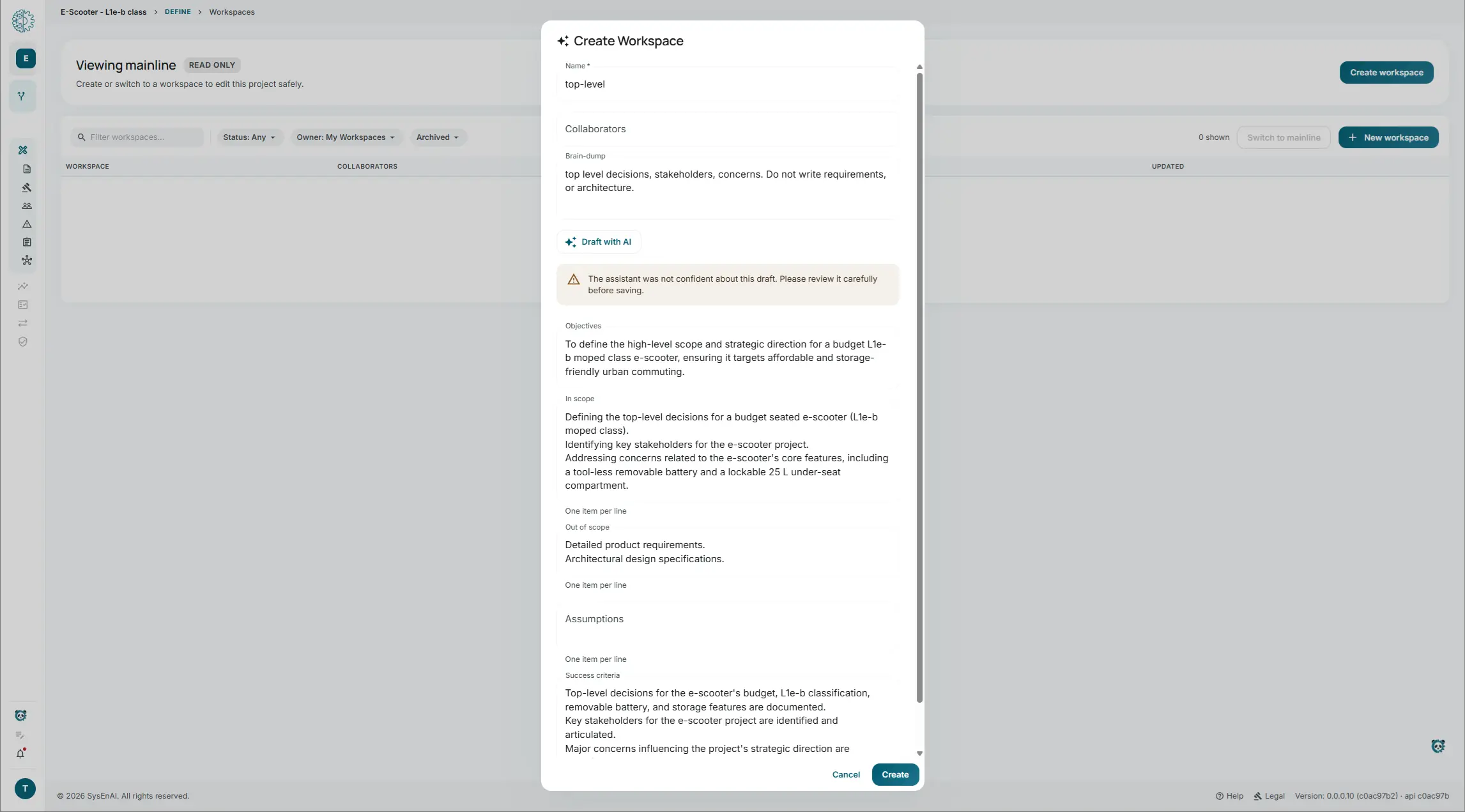
Branch
Mainline is read-only. Every change — yours or the machine's — happens on a workspace, so the source of truth is never edited in place.
Review & merge
Thirty changes, approved item by item by named humans, promoted in one act. Then it is permanent — and who approved what is part of the record.
See it on your requirements.
Bring your requirements set to a 30-minute demo. We'll show you the traceability graph it builds.